
Downsizing in Utah: The Complete Guide for Empty Nesters
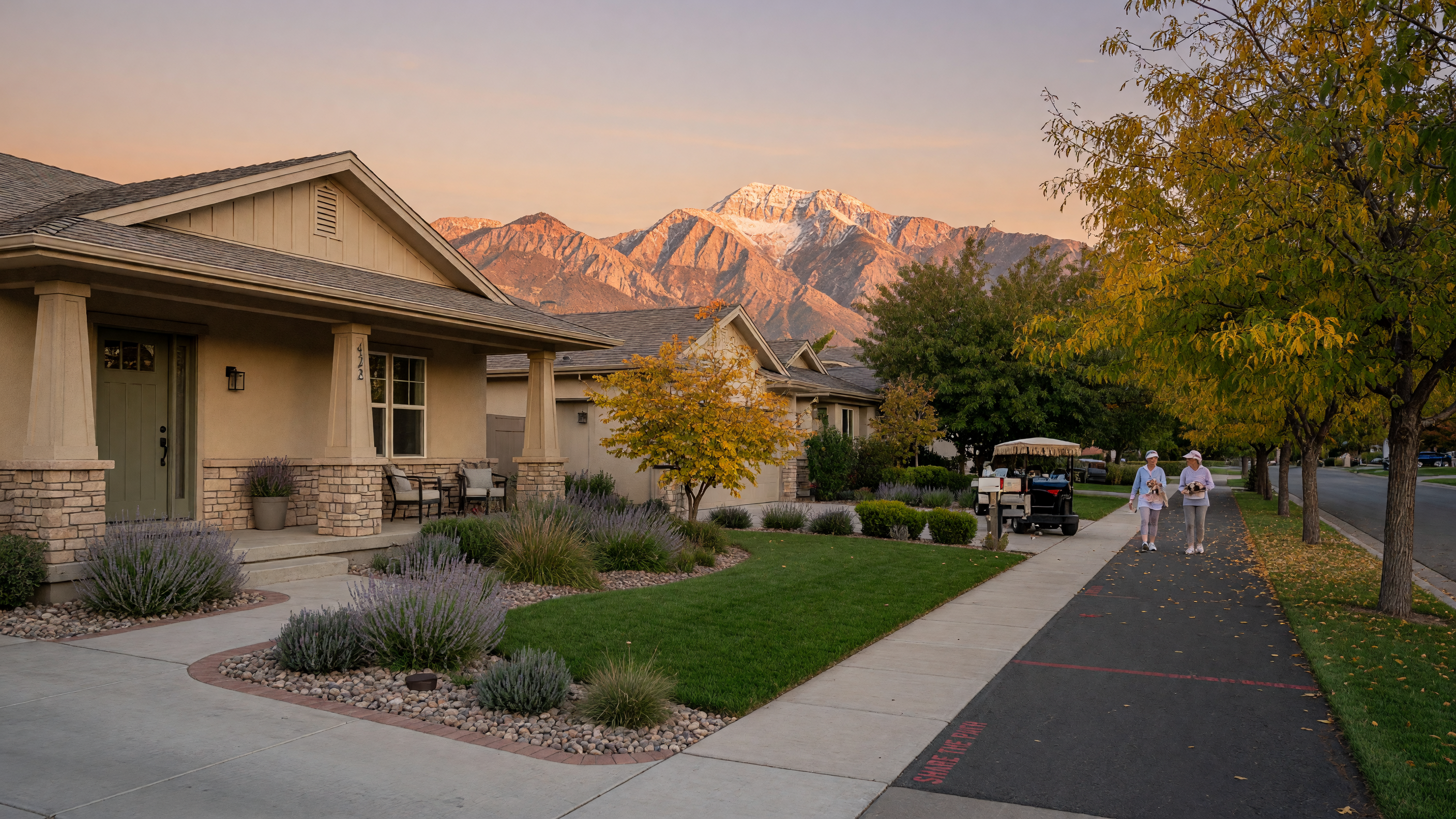
Across Utah's Wasatch Front, a quiet shift is underway. Thousands of homeowners who raised families in four- and five-bedroom houses are now looking at their empty rooms and asking a simple question: Do we still need all this space? For many, the answer is no — and the decision to downsize is opening the door to a lifestyle that is simpler, more affordable, and often more fulfilling than what they had before.
Downsizing is not about giving something up. It is about right-sizing — finding a home that matches the life you are living now, not the life you lived fifteen years ago. And along the Wasatch Front, Utah has never had more options for empty nesters and retirees ready to make that move. From master-planned communities like Daybreak to new 55+ active adult neighborhoods in South Jordan, Herriman, and Draper, the region offers a range of possibilities designed specifically for this transition.
Adam Stark, SRES, a Seniors Real Estate Specialist with Stark Group Real Estate at Summit Sotheby's International Realty, has guided hundreds of clients through the downsizing process. "This is one of the most personal transitions a homeowner will go through," Adam says. "There is the financial side, the practical side, and then there is the emotional side — and all three deserve attention." This guide covers every dimension of that decision.
Why Empty Nesters Are Downsizing on the Wasatch Front
The motivations for downsizing are as varied as the homeowners making the move, but several themes come up again and again. Understanding those motivations is the first step in determining whether downsizing makes sense for you.
Lower Maintenance, More Freedom
A 3,000-square-foot home on a quarter-acre lot means regular roof repairs, landscaping, snow removal, HVAC servicing, and the constant low-grade stress of knowing something will eventually need fixing. For homeowners in their late 50s, 60s, and 70s, that maintenance burden can become exhausting — especially if they want to spend their time traveling, pursuing hobbies, or simply enjoying the Utah outdoors without worrying about the gutter cleaning schedule.
Downsized homes and 55+ communities typically handle exterior maintenance, landscaping, and snow removal through HOA services. That means weekends are free. The trade-off is monthly dues, which we will cover in detail below, but for many homeowners the math and the lifestyle both come out ahead.
Right-Sizing for the Next Chapter
The average American family shrinks from 3.1 people to 1.9 people once the last child leaves home. That is a significant reduction in the amount of space you actually use on a daily basis. Many empty nesters find that they live primarily in the kitchen, the primary bedroom, and one living area — while three bedrooms sit empty and a formal dining room collects dust.
Right-sizing means choosing a floor plan that fits how you live now. Single-level living, open kitchens, spacious primary suites, and a guest room for visiting grandchildren check every box for most downsizers without the overhead of a home designed for a family of five.
Unlocking Equity
This is the financial motivation that catches many people off guard. Along the Wasatch Front, home values have appreciated significantly over the past decade. A couple who purchased a four-bedroom home in Sandy or Draper for $350,000 ten years ago may now be sitting on $800,000 or more in equity. Downsizing into a $450,000 to $550,000 home or villa can free up hundreds of thousands of dollars — money that can fund retirement accounts, travel, healthcare planning, or simply a more comfortable financial cushion.
"When clients see the numbers, it changes the conversation," Adam says. "They realize that downsizing is not just about less space — it is about more options."
Lower Utility Costs
Heating and cooling a 3,500-square-foot home in Utah costs significantly more than a 1,600-square-foot ranch. Utah's winters are cold and its summers are warm, and energy bills for large homes can easily reach $400 to $600 per month. Downsized homes, especially new construction built to current energy standards, often cut utility costs by 30% to 50%. New 55+ communities along the Wasatch Front feature energy-efficient insulation, tankless water heaters, smart thermostats, and modern HVAC systems that keep monthly costs predictable and low.
When to Start Planning Your Downsizing Move
One of the most common regrets Adam hears from clients is this: I wish we had started sooner. Downsizing is not a decision you make overnight, and the process of sorting, packing, selling, and transitioning takes longer than most people expect. Here is a general timeline to consider.
12 to 18 Months Before Moving
Start the conversation. Talk with your spouse, your family, and a real estate professional who understands the local market. This is the time to assess your current home's value, begin researching communities, and think through what you want in your next home. If a 55+ community interests you, join waitlists early — popular communities like SpringHouse Village at Daybreak and Haven in South Jordan can have waiting periods.
9 to 12 Months Before Moving
Begin the physical work. Sort through belongings room by room. This is often the hardest part emotionally, so give yourself more time than you think you need. Hold a family meeting and invite adult children to take items they want. Consider a professional organizer who specializes in downsizing — it is an investment that pays for itself in reduced moving costs and emotional stress.
6 to 9 Months Before Moving
List your current home. In the Wasatch Front's market, well-priced homes typically sell within 30 to 60 days, but you want the flexibility to time your sale with your purchase. Work with your agent to price strategically and prepare the home for market. At the same time, narrow your search for the next home and begin making offers.
3 to 6 Months Before Moving
Close on both transactions, coordinate your move, and settle into your new community. If you are moving into a 55+ community, this is when you start attending social events, joining clubs, and meeting your neighbors. The earlier you engage, the faster the new place starts to feel like home.
What to Look for in a Downsized Home
Not every smaller home is a good downsizing candidate. The goal is to find a property that simplifies your life without creating new inconveniences. Here are the features that matter most.
Single-Level Living
This is the number-one feature for most downsizers. Stairs become a daily friction point as mobility changes over time, and a single-level floor plan — or a primary suite on the main floor — ensures you can live comfortably in the home for decades. Many 55+ communities along the Wasatch Front are designed with this principle from the ground up: zero-entry showers, wide doorways, no-step entries, and open floor plans that accommodate wheelchairs and walkers if needed.
Low-Maintenance Exterior
Look for communities where exterior maintenance, landscaping, and snow removal are included in the HOA. This is standard in most 55+ active adult communities and many townhome developments. You should also evaluate the HOA's financial health — review reserve studies and meeting minutes to make sure the community is well-managed and not headed for a special assessment.
Adequate Storage
Downsizing does not mean getting rid of everything. A good downsized home includes smart storage solutions: walk-in closets, a pantry, an attached garage, and ideally some attic or basement storage. Communities that offer additional storage units for seasonal items, kayaks, or holiday decorations are worth a closer look.
Guest Space for Family
Empty nesters still want family to visit. A guest bedroom or a flexible room that doubles as an office and guest space is one of the most valued features in downsized homes. Some 55+ communities also offer guest suites that can be reserved for visitors, giving you hosting capacity without dedicating permanent square footage.
Proximity to What Matters
Consider what daily life looks like in your new location. How close is the grocery store? The doctor's office? The golf course or trailhead? Along the Wasatch Front, communities in South Jordan, Draper, Sandy, and Herriman offer strong access to healthcare, shopping, dining, and outdoor recreation. Daybreak, for instance, puts Oquirrh Lake, 50 miles of trails, restaurants, and a farmers market within walking or biking distance of most homes.

55+ Active Adult Communities Worth Exploring
The Wasatch Front has seen a surge in purpose-built active adult communities in recent years. Here are some of the strongest options for empty nesters considering the move. For a detailed community-by-community breakdown with pricing, amenities, and HOA comparisons, see our Top 55+ Active Adult Communities for Empty Nesters guide — and for the full landscape of 55+ options along the Wasatch Front, our 55+ Communities in Utah: The Complete Guide covers every major active adult neighborhood.
SpringHouse Village at Daybreak (South Jordan)
SpringHouse Village is the premier 55+ community within Daybreak, South Jordan's award-winning master-planned development. The community features a 10,000-square-foot private amenity center called The Spring House, which includes a fitness center, pool, spa, pickleball and bocce courts, a golf simulator, and social gathering spaces. Homes range from approximately 1,200 to 4,300 square feet, with pricing starting in the $400,000s. The combination of private 55+ living with full access to Daybreak's trails, lake, shops, and restaurants makes this the most complete active adult community in Salt Lake County.
The Dell at Jordan Cliffs
The Dell at Jordan Cliffs is a newer community concept positioned in the South Jordan area, designed specifically for active adults seeking low-maintenance living with mountain proximity. While details on this emerging community are still developing, it represents the wave of new 55+ construction responding to demand from empty nesters along the Wasatch Front. If you are interested in what is available or coming soon in this area, reaching out to a local specialist like Adam Stark — who tracks new construction and upcoming communities daily — is the best way to stay informed.
Harvest Gardens Villas (Riverton)
Developed by Ivory Homes, Harvest Gardens Villas offers luxury 55+ villa living in Riverton. The community sits near The District at Riverton, a growing commercial and entertainment hub, and features single-level floor plans with attached garages, modern finishes, and outdoor living spaces. For active adults who prefer a quieter, more suburban atmosphere with easy access to the Jordan River Parkway trail system, this community delivers a strong balance.
Haven (South Jordan)
Haven is a newer 55+ community under construction in South Jordan, featuring attached townhomes and single-family homes with a clubhouse, pool, and pickleball courts. The community is designed for active adults who want a fresh, modern home with resort-style amenities in a central Salt Lake County location.
Midas Creek Villas (Herriman)
Built by Leisure Villas, a developer specializing in 55+ active adult communities, Midas Creek Villas offers an intimate community setting in Herriman. Homes range from approximately 1,800 to 3,000 square feet, with pricing from the low $500,000s. The community includes a clubhouse, pool, fitness center, and theater room, with access to Herriman's trail network and proximity to Butterfield Canyon for outdoor recreation.
The Financial Side of Downsizing
The financial equation of downsizing is more nuanced than "sell high, buy low." Here is a realistic breakdown of what to expect.
Equity from Your Current Home
Along the Wasatch Front, median home prices in communities like Sandy ($755,000), Draper ($875,000+), and South Jordan ($620,000) mean that long-time homeowners are sitting on substantial equity. If you purchased your home for $300,000 to $400,000 a decade ago, your equity position could easily support a cash purchase of a downsized home with money left over for retirement savings, travel, or investments.
Adam recommends running the numbers with a financial advisor before making any decisions. "The equity piece is exciting, but you want to make sure the move makes sense for your complete financial picture — taxes, insurance, retirement accounts, and long-term care planning all factor in."
HOA Dues and What They Cover
Most 55+ communities along the Wasatch Front charge monthly HOA dues that range from $150 to $400, depending on the community and the amenities included. At SpringHouse Village at Daybreak, the HOA covers exterior maintenance, landscaping, snow removal, and access to The Spring House amenity center. At communities like Midas Creek Villas or Harvest Gardens, dues cover similar services on a smaller scale.
The key question is not whether you are paying HOA dues — it is what you are getting in return. When you subtract the cost of lawn care ($200 to $400/month), snow removal ($100 to $200/month), exterior maintenance, and the time and stress of managing all of it yourself, most downsizers find that HOA dues are a net positive.
Lower Utility Costs
New construction 55+ homes along the Wasatch Front are built to current energy standards, with superior insulation, energy-efficient windows, tankless water heaters, and smart home technology. A downsizer moving from a 1990s-era 3,500-square-foot home to a 1,600-square-foot new-build ranch can expect to cut utility costs by 30% to 50%. In practical terms, that is a savings of $1,500 to $3,000 per year — money that adds up significantly over a 20- or 30-year retirement.
Tax Considerations
Utah does not tax Social Security benefits, which is a financial advantage for retirees. Property tax rates along the Wasatch Front generally fall between 0.5% and 0.8% of assessed value, though rates vary by county and school district. A lower-valued downsized home means lower property taxes — another recurring savings that compounds over time. Additionally, the profit from selling your primary residence is excluded from capital gains taxes up to $250,000 for single filers and $500,000 for married couples filing jointly, provided you have lived in the home for at least two of the past five years.
Want to run the numbers on your specific situation?
Adam Stark, SRES, can provide a personalized market analysis of your current home and help you understand what your downsizing options look like — financially and practically.
The Emotional Side of Letting Go
Every downsizing guide talks about square footage, equity, and HOA dues. Far fewer talk about the hardest part: leaving the home where your kids took their first steps, where holiday dinners happened for twenty years, where the pencil marks on the doorframe tracked three children from birth to adulthood.
"That emotional piece is real, and I never minimize it," Adam says. "A house is not just an asset — it is a container for your family's story. Acknowledging that is the first step to moving forward."
Here are some strategies that help clients navigate the emotional side of downsizing:
- Document the memories before you move. Walk through the house with a camera or video and narrate the stories. Share the video with your children. The house may change owners, but the memories stay with you.
- Give your adult children first pick. Invite them to take furniture, artwork, or family heirlooms they want. This turns a loss into a sharing moment and ensures meaningful items stay in the family.
- Focus on what you are gaining. A lower-maintenance home means more time for travel, hobbies, grandchildren, and experiences. Frame the move as a transition to freedom, not a retreat from the past.
- Start small if you need to. You do not have to sort the entire house in a weekend. Tackle one room at a time, give yourself breaks, and celebrate the progress.
- Lean on your agent. A good real estate agent who understands the emotional dimension of downsizing is worth their weight in gold. They can recommend resources, pace the process, and provide the reassurance that this transition, while hard, is one that millions of people have made successfully.
Adam Stark, SRES: Your Downsizing Specialist
Adam Stark holds the SRES (Seniors Real Estate Specialist) designation, a certification that provides specialized training in the unique needs of clients over 50. This is not a generic real estate credential — SRES-certified agents are trained to address the financial, legal, and emotional dimensions of life transitions that come with downsizing, relocating to a 55+ community, or selling a long-time family home.
Adam's background in finance adds an additional layer of expertise. He helps clients analyze the true cost-benefit of a move — factoring in equity, tax implications, HOA costs, utility savings, and long-term financial planning. Combined with Natalie Stark's deep knowledge of historic neighborhoods and new developments across the Wasatch Front, the Stark Group offers a complete resource for empty nesters navigating this transition.
"I have had clients who spent six months researching on their own and then one conversation with us clarified everything," Adam says. "The market moves fast, the communities evolve, and having someone who knows the landscape saves you time, money, and a lot of stress."
Your Downsizing Checklist
If you are considering downsizing along the Wasatch Front, here is a practical checklist to get started:
Frequently Asked Questions About Downsizing in Utah
How much equity do I need to downsize?
There is no fixed number. Many downsizers along the Wasatch Front are able to sell their current home and purchase a new one outright — without a mortgage — using the equity they have built. Others use a portion of their equity as a down payment and carry a smaller mortgage. The right approach depends on your retirement income, tax situation, and financial goals.
Is it better to downsize before or after retirement?
This depends on your employment timeline and housing market conditions. Downsizing while still employed can be advantageous because you have stable income to support a new mortgage if needed. However, if you are ready to move and the numbers work, there is no reason to wait. The best time to downsize is when your lifestyle and finances both align.
What happens to my stuff?
A combination of approaches works best: family takes what they want, donations go to organizations like the Deseret Industries or local charities, a professional estate sale company can handle high-value items, and a professional junk removal service handles the rest. Adam can connect you with trusted local resources for every step of this process.
Can I afford a 55+ community if I am not wealthy?
Yes. Active adult communities along the Wasatch Front span a wide range of price points. Entry-level floor plans in communities like SpringHouse Village start in the $400,000s, and the equity from selling a larger home often covers the entire purchase. Monthly HOA dues are offset by eliminated maintenance and yard work costs. The financial equation works for a broader range of budgets than most people expect.
What if my spouse is not ready?
This is one of the most common dynamics Adam encounters. Usually, one partner is ahead of the other in the decision-making process. His advice: "Start with community tours and conversations, not contracts. Walking through a community together, seeing the amenities, and imagining daily life there does a lot to align two people who are at different stages of readiness."
Start Your Downsizing Conversation
Downsizing is not a decision to rush, and it is not one to put off indefinitely either. The Wasatch Front's 55+ market is growing, the best communities fill up quickly, and the financial window created by today's home values will not last forever. Whether you are six months away from making the move or just starting to think about it, the right time to have the conversation is now.
Adam Stark, SRES, and Natalie Stark have helped hundreds of families across the Wasatch Front navigate this exact transition. They understand the financial math, the local communities, and — most importantly — the human side of leaving one home and finding the next.
Ready to explore your downsizing options?
Schedule a no-pressure consultation with Adam Stark, SRES — your certified downsizing specialist. He will walk you through the financial picture, tour communities with you, and help you find the right fit for this next chapter.
Related Articles
Top 55+ Communities for Empty Nesters
Compare active adult communities along the Wasatch Front
55+ Communities in Utah: The Complete Guide
Compare active adult communities along the Wasatch Front
Your Complete Guide to Daybreak
Utah's largest master-planned community
Contact the Stark Group
Schedule your personalized consultation