Could MLB Come to Salt Lake City? Utah's Expansion Bid Explained
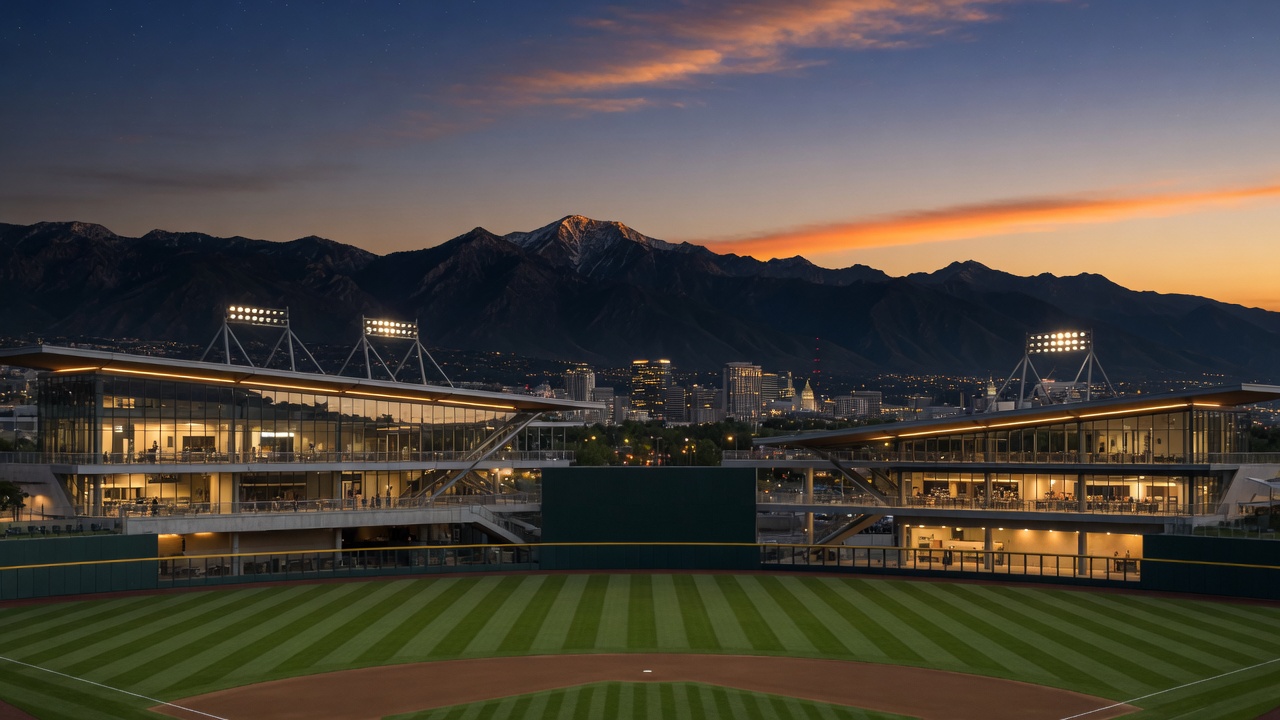
Salt Lake City is no longer just talking about Major League Baseball. It is building the case — and the infrastructure — for an expansion franchise. As MLB weighs its options for growing to 32 teams, the Big League Utah coalition has positioned Salt Lake City as one of the strongest contenders in the race, drawing national attention and serious momentum. For a metro area that has watched the Jazz, Real Salt Lake, the Utah Mammoths, and the Salt Lake Bees each prove that this market can sustain professional sports at the highest level, a Major League Baseball team feels less like a dream and more like an inevitability.
The Big League Utah Coalition
The effort to bring MLB to Salt Lake City is led by Big League Utah (BLU), a coalition formed in April 2023 that brings together political leaders, business executives, and community stakeholders behind a single goal: landing a Major League Baseball franchise for the state. At the center of the coalition is the Larry H. Miller Company (LHMCO), the family business founded by the late Larry H. Miller — the same owner who brought the Utah Jazz to prominence and who built a business empire deeply rooted in Utah's sports and entertainment culture.
Gail Miller, Larry's widow and a beloved figure in Utah philanthropy, has been the public face of the effort, lending both credibility and emotional weight to the bid. The company's CEO, Steve Starks, has overseen the strategic planning, including the development of a massive mixed-use district on Salt Lake City's west side that could anchor a future MLB stadium. The advisory board includes a who's who of Utah business leaders and former professional athletes, all working to demonstrate that Salt Lake City has the market size, the corporate support, and the fan appetite to sustain a Major League franchise.
The Power District: A $3.5 Billion Vision
The centerpiece of Utah's bid is the Power District, a planned $3.5 billion mixed-use development stretching across more than 100 acres on Salt Lake City's west side, near North Temple and the Salt Lake City International Airport. The site is being developed by the Larry H. Miller Company and is designed to serve as a transformative urban neighborhood — with residential, retail, office, entertainment, and hospitality space — anchored by a future Major League Baseball stadium.
Groundwork began in October 2025, when crews started the process of relocating Rocky Mountain Power offices that currently occupy part of the site. That relocation is expected to be completed by September 2027, making the site "shovel-ready" for stadium construction once an expansion team is awarded. The scale of the project is enormous: the Power District is designed to be a year-round destination that activates the west side of Salt Lake City in a way that no single development has before.
The choice of location is strategic. The site sits at the intersection of major transportation corridors — the airport, Interstate 15, the TRAX Green Line, and FrontRunner commuter rail are all within close proximity. For MLB, which prioritizes accessibility and infrastructure when evaluating expansion candidates, Salt Lake City's proposed stadium site checks virtually every box.
What Does the MLB Timeline Look Like?
Commissioner Rob Manfred has repeatedly stated his desire to oversee the expansion process before his tenure ends in January 2029. However, the formal expansion process has not yet launched as of mid-2026. MLB is still evaluating potential markets, and the league's ownership committee is expected to present recommendations in the coming year or two.
The most realistic timeline puts new expansion teams on the field no earlier than 2032 or 2033. That may feel like a long wait, but it is a normal timeline for major league expansion. Cities need time to finalize stadium plans, secure public-private partnerships, build fan engagement, and establish the local infrastructure that supports a 81-game home schedule. Salt Lake City is using this runway wisely, getting the Power District site ready and building community support long before a team is officially announced.
And the competition is real. Nashville has long been considered the frontrunner for one expansion slot, with its own ownership group and stadium plan. Portland, Oregon, has also expressed interest. But in recent months, national baseball insiders and media outlets — including a June 2026 report in the Salt Lake Tribune — have described Salt Lake City as a "heavy favorite" for one of the two expected expansion franchises. The Larry H. Miller Company's deep pockets, the shovel-ready stadium site, and Utah's proven track record with professional sports all work in the state's favor.
Utah's Proven Sports Market
One of the strongest arguments for MLB in Salt Lake City is that Utah has already proven — repeatedly — that it can support professional franchises at the highest level. This is not a market that needs to be convinced to show up for a game. It is a market that already shows up, passionately and consistently, for every team that calls it home.
Utah Jazz (NBA)
The Jazz have been a pillar of Utah's sports identity since the franchise relocated from New Orleans in 1979. Under the late Larry H. Miller's ownership, the Jazz became a perennial playoff contender and a cultural institution. Today, with a young core and the No. 2 pick in the 2026 NBA Draft Lottery, the franchise's future has never looked brighter. Vivint Arena regularly sells out, and the Jazz remain one of the most-watched teams in the league relative to market size.
Real Salt Lake (MLS)
Real Salt Lake joined Major League Soccer in 2005 and has been one of the league's model franchises ever since. The club won the MLS Cup in 2009, regularly competes for playoff spots, and has built one of the most dedicated supporter cultures in the league. America First Field in Sandy draws passionate crowds, and the club's youth academy has produced multiple U.S. national team players. Real Salt Lake proved that Salt Lake City could sustain a major league franchise — and that was nearly two decades ago.
Utah Mammoths (NHL)
The arrival of the Utah Mammoths franchise — relocated from Arizona and approved by the NHL Board of Governors in April 2024 — has been nothing short of a phenomenon. The team posted a 38-31-13 record in its inaugural season, then broke through with a 43-33-6 record and a playoff appearance in 2025-26. Youth hockey registrations have surged statewide. The Mammoth Ice Center, a 146,000-square-foot facility in Sandy, opened to the public in early 2026. The Mammoths' rapid success demonstrated something crucial for MLB evaluators: Utah does not just adopt new sports teams. It embraces them immediately and with intensity.
Salt Lake Bees (MiLB)
The Salt Lake Bees are Utah's longest-standing professional baseball franchise, and they provide a direct proof of concept for Major League Baseball in the market. The Bees moved into the brand-new, privately funded $140 million Ballpark at America First Square in Daybreak in April 2025, and the response has been overwhelmingly positive. The 6,500-seat stadium — with a TRAX station at its gates and a 200-acre mixed-use development rising around it — is the kind of facility that shows MLB the fan base and infrastructure are already in place. A Major League team would not be starting from scratch in Salt Lake City. It would be building on top of a baseball foundation that already exists.
Economic Impact: What MLB Could Mean for the Wasatch Front
The economic ripple effects of a Major League Baseball franchise on the Salt Lake metro area would be substantial. MLB teams generate revenue not just on game days, but year-round — through spring training, minor league affiliates, All-Star events, and national media exposure. A new stadium anchors commercial development, drives hotel and restaurant demand, creates thousands of construction and permanent jobs, and raises the international profile of the host city.
For the communities along the Wasatch Front, the benefits would radiate outward. South Jordan, Sandy, Draper, Herriman, and Riverton — all within a 20-to-30-minute drive of a potential west-side stadium — would see increased foot traffic, higher property values, and stronger demand from buyers who want to live close to a Major League venue. The Power District itself is projected to generate significant tax revenue for Salt Lake City and Salt Lake County, with the added benefit of revitalizing a part of the city's west side that has long been underutilized.
Consider the precedent set by Daybreak's experience with the Bees. Since the ballpark opened, local businesses have reported increased revenue on game days, new retail tenants have signed leases in the surrounding development, and real estate inquiries in the area have risen. Multiply that effect by the scale of an MLB franchise — 81 home games, a larger stadium, national TV contracts, and a much bigger operating footprint — and it becomes clear why cities across the country compete aggressively for expansion teams.
Why Salt Lake City Makes Sense
When MLB evaluates expansion candidates, the league looks at several factors: market size, corporate support, stadium readiness, media market strength, transportation infrastructure, and the track record of existing sports franchises. Salt Lake City scores well on every one of these criteria.
- The Salt Lake City-Provo-Ogden metro area has a population of over 2.7 million, making it one of the fastest-growing metro areas in the country.
- Utah consistently ranks among the top states for population growth, job growth, and quality of life.
- The Power District site is adjacent to an international airport, a major interstate, and a commuter rail corridor — a rarity among expansion candidates.
- The Larry H. Miller Company has the financial resources and the track record to fund a stadium and sustain a franchise through its early years.
- Four professional franchises (Jazz, Real Salt Lake, Mammoths, Bees) have already proven the market's depth and loyalty.
What Comes Next
The next few years will be decisive. As MLB's ownership committee evaluates expansion candidates and the league formalizes its process, Salt Lake City's bid will be judged alongside Nashville, Portland, and potentially other cities. The Big League Utah coalition continues to build support at the state and local level, and the Power District site continues to move toward shovel-readiness.
For residents of the Wasatch Front, the possibility of an MLB team is more than an exciting sports headline. It is a reflection of a region that has matured into one of the most dynamic metro areas in the American West. The infrastructure is being built. The fan base already exists. And the people behind the bid have the resources and the vision to see it through.
If you have been watching Utah's sports landscape evolve — from the Jazz's rise in the 1990s to the Mammoths' explosive arrival — you know that this state does not just support its teams. It embraces them. An MLB franchise in Salt Lake City would not just be another team on the schedule. It would be the next chapter in a story that has been building for decades.
Thinking about making a move to Utah?
Whether you are relocating for work, drawn by Utah's growing sports scene, or just curious about what the Wasatch Front has to offer, we would love to help you find the right community.
Contact the Stark GroupRelated Articles
Salt Lake Bees: A New Era at Daybreak
The Bees' brand-new ballpark and what it means for the community
Utah Mammoths: A Franchise on the Rise
How the Mammoths proved Utah can support new franchises
Utah Jazz: Building for the Future
Utah's NBA franchise continues to grow
Talk to the Stark Group
Expert guidance for buying or selling on the Wasatch Front