
The History of Utah: Native American Tribes, Pioneers & the Road to Statehood
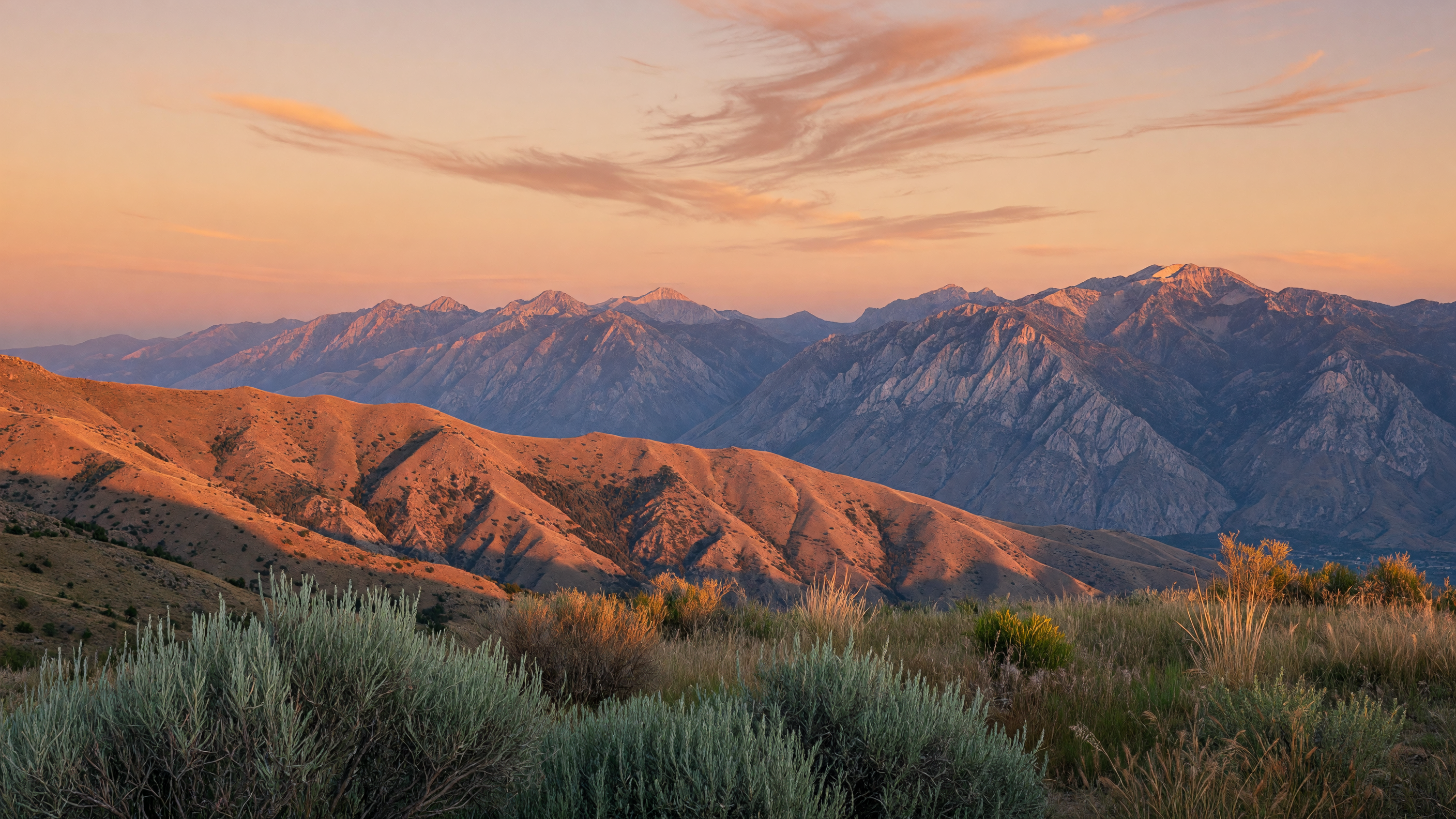
Long before Salt Lake City had a skyline, long before the first covered wagon crested the Wasatch Range, and long before the state of Utah appeared on any map, this land belonged to the people who had lived here for thousands of years. Understanding Utah's history means starting with them — the Native American tribes whose cultures, traditions, and deep connection to this landscape shaped the region long before European settlement.
Today, when you drive through the Wasatch Front, hike a canyon trail, or watch the sun set over the red rocks of southern Utah, you are moving through a landscape that has been home to Indigenous peoples for at least 11,000 years. Archaeological evidence from sites across the state — from the rock shelters of the eastern canyons to the lake shores of the Great Basin — tells a story of continuous human presence stretching back to the end of the last Ice Age.
The First Peoples of Utah
At the time of first European contact in the late 1700s and early 1800s, at least eight distinct tribes inhabited the area that would become Utah. Each had adapted to the specific terrain and climate of their territory — from the high alpine valleys of the north to the desert basins of the west and the red-rock plateaus of the south. The five most prominent were the Ute, Paiute, Goshute, Shoshone, and Navajo.
Four of these tribes — the Ute, Paiute, Goshute, and Shoshone — spoke related languages belonging to the Numic language family, part of the broader Uto-Aztecan language group. The Navajo, who occupied the southeastern corner of the state, spoke an Athabaskan language entirely unrelated to the others, reflecting their distinct origins and migration history. Together, these tribes represented an extraordinary diversity of cultures, economies, and worldviews — all shaped by the dramatic landscapes of the Great Basin, the Rocky Mountains, and the Colorado Plateau.
The Ute People: Utah's Namesake
The Ute (from the Spanish Yuta) are the people from whom the state of Utah takes its name. They were the most widespread tribe in the region, with territory spanning approximately 79 million acres across eastern Utah, western Colorado, and parts of Wyoming and New Mexico. The Ute were organized into seven distinct bands, each controlling a specific territory: the Uintah, Pahvant, Timpanogos, Sanpits, Tabeguache, Capote, and Moache.
Along the Wasatch Front — where the modern communities of Sandy, Draper, Lehi, and South Jordan now stand — the Timpanogos and Pahvant bands were the primary inhabitants. The Timpanogos lived in the Provo and Utah Valley area, centering their world around Utah Lake, where they fished for the June sucker and other native fish species. The Pahvant occupied the western Utah desert and the valleys around present-day Saratoga Springs and the west desert.
The Ute were skilled hunter-gatherers who also practiced limited agriculture. They cultivated corn, beans, pumpkins, and squash in the sheltered valleys along the Wasatch Front. They lived in brush wickiups and ramadas — temporary, lightweight shelters designed for a semi-nomadic lifestyle that followed seasonal food sources. After acquiring horses through trade with neighboring tribes, the Ute became expert horsemen, which expanded their range and transformed their hunting capabilities. Their social organization was based on extended family groups and bands led by a headman, without a centralized tribal government.
The Southern Paiute
The Southern Paiute occupied over 30 million acres in southwestern Utah, extending into southern Nevada, northwestern Arizona, and southeastern California. In Utah, their territory encompassed the area around Zion National Park, Bryce Canyon, and the colorful landscapes of the Colorado Plateau — today some of the state's most iconic natural landmarks.
The Paiute were semi-nomadic hunter-gatherers who organized themselves into small, loose bands of several families, each controlling a specific territory. They lived in conical wickiups made of willow poles covered with brush and grass. Their diet was remarkably diverse: they harvested seeds, berries, roots, and the nutrient-rich pinyon nut — a staple resource that many Great Basin tribes depended on — and they hunted small game and fished in streams and springs.
Some Southern Paiute groups also practiced small-scale agriculture, growing corn, beans, and squash in irrigated plots. They used rabbit-fur robes for warmth in the cold desert nights and developed sophisticated knowledge of the plants in their environment, using them for food, medicine, and materials. The Paiute's deep understanding of the desert landscape allowed them to thrive in an environment that many outsiders considered uninhabitable.
The Goshute: Masters of the Desert
The Goshute (also spelled Gosiute) occupied what was arguably the harshest terrain of any tribe in North America — the arid, desolate expanses of western Utah and eastern Nevada, including the Great Salt Lake Desert. Their territory encompassed some of the most extreme environments in the western United States, where summer temperatures routinely exceeded 100°F and annual rainfall measured in inches.
The Goshute lived in small family groups organized primarily around nuclear families, with no centralized authority or political structure. They were hunter-gatherers who survived at a minimal subsistence level, adapting their lifestyle entirely to the harsh desert environment. They gathered seeds, roots, and berries in the brief growing season, hunted small game like rabbits and ground squirrels, and used salt — abundant in their territory — for preserving meat and tanning hides.
Despite the extreme conditions, the Goshute maintained a rich cultural life. They were deeply knowledgeable about the seasonal cycles of plants and animals in their territory, and their oral traditions encoded thousands of years of environmental knowledge. Their survival in one of North America's most unforgiving landscapes stands as a testament to human adaptability and the depth of Indigenous ecological knowledge.
The Northwestern Shoshone
The Northwestern Band of the Shoshone inhabited the areas of northeastern Utah, including the Cache Valley, the Bear River corridor, and parts of the Wasatch Mountains. Their territory included present-day Lehi, Alpine, and the areas around the Great Salt Lake's northern shores.
Like their Ute and Paiute cousins, the Northwestern Shoshone were nomadic hunter-gatherers who followed seasonal food sources. They fished in the Bear River and other waterways, hunted deer and elk in the mountain valleys, and gathered roots, seeds, and the pinyon nut. They lived in small family groups that could gather into larger bands for seasonal activities, and they used tipis made from various materials including bison hides.
The Northwestern Shoshone are historically significant for their encounter with the Mormon pioneers who arrived in 1847. Their settlement at what is now called Battle Creek (near present-day Pleasant Grove) was one of the first points of contact between the incoming settlers and the Indigenous inhabitants of the Salt Lake Valley. This encounter — and many that followed — would forever alter the lives of the Shoshone and all the tribes of the Great Basin.
The Navajo (Diné)
The Navajo — who call themselves the Diné, meaning "The People" — occupied the southeastern corner of Utah, a region that today forms part of the Navajo Nation, the largest Native American reservation in the United States. Their Utah territory encompasses the striking red-rock landscapes of the Colorado Plateau, including the area around Monument Valley and the canyons of southeastern Utah.
The Navajo were culturally distinct from the other tribes of Utah. They spoke an Athabaskan language — unrelated to the Numic languages of the Ute, Paiute, Goshute, and Shoshone — and their ancestors had migrated from the north (present-day Canada) several centuries before European contact, likely around 1400 AD. They were influenced by the Pueblo peoples of the Southwest, adopting agriculture (growing maize, beans, and squash) and later herding sheep and goats after the introduction of these animals by the Spanish.
The Navajo built hogans — distinctive earth-covered dwellings that remain a cultural symbol today — and developed one of the most sophisticated weaving traditions in Native America. Their society was organized around a complex clan system that determined social relationships and marriage rules. The Navajo's spiritual life centered on elaborate ceremonial practices, including sand paintings and healing rituals, many of which continue to be practiced today. Their connection to the red-rock landscapes of southeastern Utah remains deep and enduring.
Life Before European Settlement
For thousands of years before European settlers arrived, these tribes lived in balance with one of the most dramatic and diverse landscapes on the continent. Archaeological sites across Utah tell a story of remarkable continuity and adaptation. The pinyon nut — harvested from pinyon pine trees that blanket the hillsides of the Great Basin and the Colorado Plateau — was a dietary staple for virtually every tribe in the region. Families would gather in the fall for communal nut-harvesting expeditions, a tradition that sustained communities and reinforced social bonds.
Trade networks connected the tribes to one another and to groups hundreds of miles away. Shells from the Pacific Coast have been found at archaeological sites in western Utah, and obsidian from Yellowstone-area sources has been discovered in sites along the Wasatch Front. These networks demonstrate that the tribes of Utah were not isolated — they were connected to a vast web of exchange and communication that spanned the continent.
The petroglyphs and rock art found throughout Utah — from the Fremont-style figures in Nine Mile Canyon to the Barrier Canyon-style paintings in the San Rafael Swell — represent some of the most spectacular examples of prehistoric art in North America. Many of these sites predate the current tribes by thousands of years, reflecting the deep, layered human history of this landscape.
The Arrival of the Mormon Pioneers (1847)
The trajectory of Utah's Indigenous peoples — and the shape of the modern state — changed dramatically on July 24, 1847, when the first company of 148 Mormon pioneers, led by Brigham Young, entered the Salt Lake Valley. The advance party, led by Orson Pratt, had arrived on July 22, and the settlers immediately began planting crops and establishing a permanent settlement at City Creek, near what is now Temple Square in downtown Salt Lake City.
Brigham Young reportedly declared, "This is the right place," upon seeing the valley — a statement that has become one of the most famous phrases in Utah history. July 24 is now celebrated annually as Pioneer Day, a state holiday that ranks alongside the Fourth of July in significance for many Utahns.
The pioneers had traveled approximately 1,300 miles from Nauvoo, Illinois, seeking refuge and a place to practice their faith freely. They found what they were looking for in the Salt Lake Valley — but the land they settled was already home to the Northwestern Shoshone, whose settlement at Battle Creek had occupied the valley for generations.
Salt Lake City, Territorial Growth & Transformation
The founding of Salt Lake City set off a remarkable period of growth. The city was formally organized as "The City of the Great Salt Lake" on January 6, 1851, and Brigham Young served as its leader and the first governor of the future territory. The population of the region surged: from approximately 11,380 residents in the 1850 census to over 40,273 by 1860, and continued to climb as new settlers arrived.
The formal political history accelerated quickly. In 1848, the region became U.S. territory following the Treaty of Guadalupe Hidalgo, which ended the Mexican-American War. A provisional State of Deseret was proposed by the Mormon settlers in 1849, but Congress declined to recognize it. Instead, on September 9, 1850, the Utah Territory was officially organized as part of the Compromise of 1850, encompassing a vast area that included parts of present-day Utah, Colorado, Nevada, Wyoming, Arizona, and California.
The completion of the First Transcontinental Railroad at Promontory Summit, Utah, on May 10, 1869, opened the territory to even faster growth and migration. By 1880, the population had reached 143,063, and by 1890 it stood at 207,905. Each wave of growth reshaped the landscape and the relationship between the settler population and the Indigenous tribes who had lived there for millennia. The Ute, Paiute, Goshute, Shoshone, and Navajo were increasingly confined to reservations as the territory filled with new arrivals.
Utah Becomes the 45th State (1896)
Utah's path to statehood was one of the longest and most contentious of any western state. For nearly half a century, the territory's application was repeatedly blocked by the U.S. Congress, primarily due to the practice of polygamy, which was central to the LDS Church at the time. Federal anti-polygamy legislation — including the Edmunds Act of 1882 and the Edmunds-Tucker Act of 1887 — created deep friction between the territory and the federal government.
The breakthrough came after the LDS Church officially renounced polygamy in 1890 through the Woodruff Manifesto. Congress passed the Enabling Act in July 1894, which authorized the people of Utah to draft a state constitution — with the explicit requirement that it ban polygamy. A constitutional convention met in Salt Lake City in 1895, drafted the document, and the voters approved it.
On January 4, 1896, President Grover Cleveland signed the proclamation admitting Utah as the 45th state. The first governor was Heber Manning Wells, and the state's population at admission was approximately 276,749 — more than 24 times the population recorded in the 1850 census just 46 years earlier. The name "Utah" — derived from the Ute people — was chosen to honor the tribe that had given the land its identity.
A Land of Many Stories
The history of Utah is not a single narrative but a layered one. It is the story of the Ute fisherman casting nets in Utah Lake, the Paiute gatherer harvesting pinyon nuts in the red-rock canyons of the south, the Goshute family surviving in the vast desert basins of the west, the Shoshone hunter following elk through the mountain valleys of the north, and the Navajo weaver creating intricate patterns in hogans on the Colorado Plateau. It is also the story of the Mormon pioneer who planted crops in a desert valley and built a city from nothing, of the railroad worker at Promontory Summit who drove the Golden Spike, and of the politician who fought for statehood.
These stories overlap and sometimes conflict, but together they form the fabric of the state. When you live in Utah — when you buy a home along the Wasatch Front, raise a family in Daybreak, or ski the mountains above Sandy — you are part of that layered history. The land beneath your feet has been home to people for over 11,000 years, and the communities you see around you are the latest chapter in an ongoing story.
Today, the Ute Indian Tribe of the Uintah and Ouray Reservation, the Paiute Indian Tribe of Utah, the Northwestern Band of the Shoshone Nation, the Confederated Tribes of the Goshute Reservation, and the Navajo Nation all maintain active presences in Utah, preserving their cultures, languages, and traditions. The Ute name lives on not just in the state's name but in dozens of place names across the region — Utah Lake, the Uinta Mountains, the town of Helper — serving as a permanent reminder of the people who were here first.
What This History Means for Today
For anyone considering a move to Utah, this history adds depth and meaning to the landscape. The communities along the Wasatch Front — from Sandy to Draper, from Lehi to Alpine — sit in one of the most historically rich regions in North America. The canyons you hike, the lakes you fish, and the valleys you drive through have been home to people for thousands of years. Understanding that history makes living here richer, more meaningful, and more connected.
If you are drawn to Utah not just for its mountains and job market but for the depth of its story, Adam and Natalie Stark would love to help you find your place in it. As local real estate experts with deep roots in the Wasatch Front, they can help you find the community that feels like home.
Historical information sourced from Utah History to Go (historytogo.utah.gov), the Utah Division of State History, the Library of Congress, and the Utah State Archives. Research references include "A History of Utah's American Indians" (Utah State University Press), the Utah History Encyclopedia (uen.org), and the Smithsonian Institution's National Museum of the American Indian.
Ready to make Utah your home?
From the mountains to the desert, Utah's landscapes are calling. Let Adam and Natalie Stark help you find the perfect community along the Wasatch Front.
Talk to an ExpertRelated Articles
Why Utah Might Be the Most Geologically Diverse State in America
10 facts that prove Utah is a geological wonder
First-Time Buyer's Guide to Utah's Wasatch Front
School districts, closing costs, and programs for buyers
Best Ski Resorts Near Salt Lake City
Alta, Snowbird, Brighton, and more
Explore Wasatch Front Communities
Daybreak, Sandy, Draper, Lehi, and more